

🔑 Key Points:
- Osteoporosis or bone loss does not automatically preclude you from getting dental implants; each case requires an individualized evaluation.
- Medications for osteoporosis, such as Prolia or bisphosphonates, do not rule out treatment, but you should never stop taking them without first consulting your doctor.
- The recovery protocol allows for a minimum healing period of four months to ensure successful osseointegration.
Conclusion: At Shtern Dental Clinic, we provide a comprehensive assessment of your oral health. We offer 3D diagnostics, PRF regenerative technology, and IV support at our facility in Cancún to provide you with safe, personalized, and coordinated implant treatment all under one roof
Being told that you have bone loss, osteoporosis, or that your medication may affect dental implant treatment can be discouraging.
But it does not always mean that dental implants are impossible.
At Shtern Dental Clinic in Cancun, we believe implant treatment should never be decided based on one diagnosis or one medication alone. Every patient is different, and the important question is not simply “Do you have bone loss?” but:
What is the condition of your bone, what medications are you taking, and how well is your body prepared to heal?
Patients with osteoporosis, reduced bone density, significant jawbone loss, or medications that affect bone metabolism may require a more individualized approach — and that is exactly how we evaluate them.
Bone Loss Does Not Automatically Mean You Cannot Have Dental Implants
Bone loss can happen for many reasons.
Some patients have lost jawbone after missing teeth for several years. Others have periodontal bone loss, reduced bone density, osteoporosis, or a combination of different factors.
In many of these situations, dental implant treatment may still be possible, but proper diagnosis and planning become especially important.
At Shtern Dental Clinic, we evaluate the actual amount and quality of available bone before deciding whether an implant can be placed safely.
Depending on the case, treatment may involve:
- Bone grafting
- Sinus lift procedures
- Regenerative techniques
- PRF membranes
- Different implant sizes or positions
- A staged surgical approach
- Additional healing time when necessary
The objective is not simply to place an implant.
The objective is to create the right biological and mechanical conditions for that implant to integrate successfully with the surrounding bone.
What If You Take Medication for Osteoporosis or Bone Loss?
Medications such as bisphosphonates, Fosamax (alendronate), Prolia (denosumab) and other antiresorptive medications require special attention because they affect bone metabolism and remodeling.
However, taking one of these medications does not automatically mean that dental implants cannot be performed.
Current research supports an individualized approach. The type of medication, dosage, how long the patient has been taking it, whether it is taken orally or intravenously, and the patient’s overall medical condition can all influence the decision.
Patients receiving high-dose intravenous medications as part of certain cancer treatments, for example, need to be evaluated very differently from patients taking standard medication for osteoporosis.
This is why we request a complete medication and medical history before making a final recommendation.
Patients should never stop or modify prescribed medication on their own before dental surgery. If necessary, our doctors may recommend coordination with the patient’s treating physician.
We Don’t Evaluate Only the Teeth — We Evaluate the Patient
At Shtern Dental Clinic, complex implant treatment is not planned from a single X-ray.
We look at the complete situation.
One of the advantages of being treated at our clinic is that the key diagnostic technology needed for implant planning is available directly inside Shtern Dental Clinic.
Our clinic has its own digital panoramic X-ray and 3D CT / CBCT equipment on-site, so patients do not need to travel to an outside imaging center for these examinations.
The evaluation may include:
- A complete medical history
- A detailed medication review
- Clinical examination
- Digital panoramic X-ray performed with our own in-house equipment
- 3D CT / CBCT scan performed directly inside our clinic
- Evaluation of gum and periodontal health
- Laboratory testing when medically indicated
A CBCT scan is particularly important in complex implant cases because it allows our implant specialists to evaluate the jawbone in three dimensions, including its height, width, anatomy, surrounding structures, nerves and the condition of the maxillary sinuses.
Because the imaging equipment is available directly in the clinic, our doctors can examine the patient, obtain the necessary scans and review the results as part of the same coordinated treatment process.
There is no need to visit a separate radiology center for the panoramic X-ray or CBCT scan.
This allows us to determine whether there is enough bone for an implant or whether additional procedures, such as bone grafting or sinus augmentation, may be required.
A Personalized Implant and Healing Protocol
Patients with compromised bone are not treated exactly the same way as patients with ideal bone conditions.
When implant treatment is considered appropriate, our doctors adapt the surgical and healing protocol according to the individual case.
This may include careful surgical techniques designed to minimize unnecessary trauma, bone grafting, regenerative membranes and PRF (Platelet-Rich Fibrin) membranes when indicated, treatment of existing periodontal inflammation and closer postoperative monitoring.
PRF is an important regenerative option that may be incorporated into implant and bone grafting procedures. It is prepared from a small sample of the patient’s own blood and processed to create a fibrin membrane rich in platelets and naturally occurring growth factors.
At Shtern Dental Clinic, PRF is prepared directly inside the clinic using our own equipment. There is no need to send the patient or the blood sample to an outside facility.
When clinically appropriate, the PRF membrane can be placed in the surgical area to support the body’s natural healing process, soft-tissue recovery and bone regeneration.
Because the PRF system is available in-house, it can be incorporated directly into the surgical procedure as part of the patient’s personalized treatment protocol.
We Allow the Implant Time to Heal
Another important part of our protocol is healing time.
At Shtern Dental Clinic, implants are allowed to heal for a minimum of approximately four months before the final implant-supported crown is placed.
This period allows the implant to undergo osseointegration, the biological process in which the implant integrates with the surrounding bone.
For patients with significant bone loss, bone grafting, reduced bone density, osteoporosis or other medical factors, the doctor may recommend an even longer healing period.
We do not rush this stage.
Giving the bone adequate time to heal and allowing proper osseointegration is an essential part of our implant protocol.
Healing Is About More Than the Mouth
Successful implant healing does not depend only on the surgical procedure.
An implant integrates into a person, not simply into a jawbone.
That is why our doctors may also consider factors such as diabetes control, smoking, nutrition, medications, general health and possible vitamin deficiencies.
Vitamin D is one example. Because it plays a role in normal bone metabolism, it may be considered in selected patients, particularly when there is a history of osteoporosis, reduced bone density or other factors that may affect healing.
Research has also suggested an association between adequate vitamin D levels and implant osseointegration.
However, vitamin D is only one factor among many. It does not determine implant success by itself.
Depending on the patient’s medical history, our doctors may recommend additional laboratory testing or discussing supplementation with the patient’s physician when appropriate.
The same approach applies to nutrition, blood sugar control, smoking, medications and other factors that may affect the body’s ability to recover.
We look at the patient as a whole, not only at the teeth.
IV Recovery Support — Also Available Inside Our Clinic
For suitable patients undergoing more extensive surgical treatment, Shtern Dental Clinic may also provide IV recovery support directly inside our clinic as part of the postoperative protocol.
The IV equipment and supportive treatment are available on-site at Shtern Dental Clinic, so patients do not need to visit a separate medical facility for this part of their care.
Depending on the patient’s individual medical assessment, IV fluids and selected vitamins or nutrients may be used to support hydration and recovery during the initial postoperative period.
This is a supportive measure and does not replace proper surgical planning, medication management, nutrition or postoperative care.
Having the clinical examination, panoramic imaging, 3D CBCT diagnostics, PRF preparation, implant surgery and appropriate IV support available within the same clinic allows our team to coordinate treatment in one place.
For international patients coming to Cancun for dental treatment, this can make the process especially convenient and organized.
Advanced Implant Care Under One Roof
For complex implant cases, coordination matters.
At Shtern Dental Clinic in Cancun, much of the technology and regenerative support used during implant treatment is available directly inside the clinic and is part of our own clinical infrastructure.
Our in-house capabilities include:
- Digital panoramic X-ray
- 3D CT / CBCT imaging
- PRF preparation and PRF membranes
- Bone grafting and regenerative procedures
- Implant surgery
- IV recovery support for appropriate patients
- Postoperative follow-up
This means patients do not need to travel to a separate imaging center for their panoramic X-ray or CBCT scan, and PRF preparation is also completed directly inside the clinic with our own equipment.
For suitable patients, IV supportive care is available on-site as well.
Keeping these important stages under one roof allows our doctors to coordinate diagnosis, surgery and recovery more closely.
Sometimes the Correct Answer Is “Not Yet”
Being experienced in complex implant treatment does not mean saying yes to every case.
Sometimes the safest recommendation is to first treat periodontal disease, improve certain health factors, perform bone regeneration, complete additional medical evaluation or coordinate with the patient’s physician.
In some cases, implant treatment may need to be postponed.
And in certain situations, another treatment may simply be safer.
Professional implant dentistry is not about finding a way to place an implant at any cost.
It is about determining whether an implant can be placed responsibly, when it should be placed and what conditions are necessary to give it the best chance of long-term success.
Frequently Asked Questions About Dental Implants and Bone Loss
Can I get dental implants if I have osteoporosis?
Possibly, yes.
Osteoporosis alone does not automatically rule out dental implants.
The decision depends on your bone quality and volume, your medications, your medical history and other individual factors.
At Shtern Dental Clinic, we evaluate the patient clinically and can perform the necessary panoramic X-ray and 3D CBCT scan directly inside our clinic before determining whether implant treatment is appropriate.
Can I get dental implants if I take Prolia?
Taking Prolia (denosumab) does not automatically mean that implants are impossible.
It is important that our doctors know why the medication was prescribed, when you started taking it and your dosing schedule.
Your case must be evaluated individually, and in some situations coordination with your treating physician may be recommended.
Can I get dental implants if I take bisphosphonates?
It depends on the medication, dosage, duration of treatment, route of administration and your overall medical condition.
Oral medication for osteoporosis and high-dose intravenous medication used in some oncology treatments represent very different clinical situations.
This is why we do not give a universal yes-or-no answer without evaluating the patient.
Should I stop my osteoporosis medication before dental implant surgery?
No medication should be stopped without consulting the physician who prescribed it.
If a medication adjustment needs to be considered, the decision should be made together with the treating physician and dental surgeon.
What if I don’t have enough bone for dental implants?
Lack of bone does not automatically mean implants are impossible.
Depending on the location and severity of bone loss, treatment options may include bone grafting, sinus lift procedures, regenerative techniques, PRF membranes or a different implant strategy.
Our in-house 3D CBCT scan allows our specialists to evaluate exactly how much bone is available and determine what may be required.
How do you know if I have enough bone for an implant?
A 3D CBCT scan is one of the most important diagnostic tools for implant planning.
It allows the doctor to evaluate the height, width and anatomy of the bone and identify important structures such as nerves and the maxillary sinus.
At Shtern Dental Clinic, both the digital panoramic X-ray and CBCT equipment are located directly inside our clinic in Cancun, so these examinations can be performed on-site without sending patients to another imaging center.
Do I need to go somewhere else for my CT scan or panoramic X-ray?
No.
Shtern Dental Clinic has its own panoramic X-ray and 3D CBCT equipment directly inside the clinic.
Patients can complete their examination and diagnostic imaging in the same location, allowing our doctors to review the scans directly and coordinate the treatment plan.
What is a PRF membrane?
PRF, or Platelet-Rich Fibrin, is a regenerative membrane prepared from a small sample of the patient’s own blood.
The blood is processed to create a fibrin membrane containing platelets and naturally occurring growth factors.
When clinically appropriate, PRF may be used during implant surgery, bone grafting or other regenerative procedures to support natural tissue healing and regeneration.
Is PRF prepared at Shtern Dental Clinic?
Yes.
PRF is prepared directly inside Shtern Dental Clinic using our own in-house equipment.
The patient’s blood is collected and processed in the clinic, and the PRF membrane can then be incorporated directly into the surgical procedure when indicated.
There is no need to visit another facility for PRF preparation.
How long do dental implants need to heal before getting the final crown?
At Shtern Dental Clinic, we allow a minimum healing period of approximately four months before placing the final crown on an implant.
Some patients may require a longer healing period, particularly when bone grafting has been performed or when bone quality, osteoporosis or other medical factors require additional healing time.
Does vitamin D affect dental implant healing?
Vitamin D plays a role in normal bone metabolism, and research suggests that adequate vitamin D levels may support normal osseointegration.
However, it is only one of many factors that can affect healing.
Depending on the patient’s medical history, our doctors may consider vitamin D together with other factors such as nutrition, medications, diabetes control and general health.
Can bone grafting be done if I have osteoporosis?
In some patients, yes.
The decision depends on the severity of the osteoporosis, medication history, bone condition, type of graft required and overall health.
A personalized examination and 3D evaluation are necessary before determining whether bone regeneration is appropriate.
Do you offer IV support after implant surgery?
For suitable patients undergoing more extensive procedures, IV recovery support may be available directly inside Shtern Dental Clinic.
The equipment and supportive treatment are provided on-site and may be incorporated into the recovery protocol when medically appropriate.
Patients do not need to travel to a separate facility for this service.
Is all the diagnostic technology located inside the clinic?
Yes.
Our digital panoramic X-ray, 3D CT / CBCT equipment and PRF preparation system are located directly inside Shtern Dental Clinic.
For appropriate patients, IV recovery support is also available on-site.
This allows many of the important stages of implant diagnosis, surgery and recovery to be coordinated in one location.
What happens if you decide that implants are not safe for me?
We will tell you.
Sometimes treatment can be performed after additional preparation or after allowing certain conditions to improve.
In other cases, our specialists may recommend an alternative treatment.
Our priority is not simply to perform surgery — it is to recommend treatment that makes sense for your individual situation.
Complex Dental Implant Treatment in Cancun — All in One Clinic
If you have previously been told that dental implants are not possible because of bone loss, osteoporosis, insufficient jawbone, Prolia, bisphosphonates or another medical condition, that does not necessarily mean there are no options.
It does mean your case deserves a thorough evaluation.
At Shtern Dental Clinic in Cancun, Mexico, our team combines advanced implant diagnostics, implant surgery, bone regeneration and personalized healing protocols.
An important advantage for our patients is that the essential technology is available directly inside our clinic.
Our own digital panoramic X-ray and 3D CBCT equipment are located on-site, PRF membranes are prepared in-house using our own equipment, and for suitable patients, IV recovery support is also available inside the clinic.
This means that from the initial clinical examination and diagnostic imaging through regenerative procedures, implant surgery and follow-up, we can keep the major stages of care coordinated in one place.
No separate imaging center is needed for your panoramic X-ray or CBCT scan, and PRF preparation is performed directly in our clinic.
For patients traveling from the United States, Canada or other countries for dental implant treatment in Cancun, having these services available under one roof can make the treatment process more convenient, efficient and coordinated.
We don’t treat only an X-ray.
We don’t treat only a medication list.
We treat the person as a whole — with the technology, regenerative protocols and clinical support available directly inside our clinic.
Contact Shtern Dental Clinic to schedule an evaluation and bring a complete list of your medications and relevant medical information. After the appropriate clinical examination and in-house imaging, our specialists can explain which treatment options are appropriate for your specific case.
This article provides general information and does not replace an individual medical or dental examination. Implant treatment and surgical protocols are determined individually after clinical and radiographic evaluation
UNAM/ 5758458 COFEPRIS: 2423022002A00042
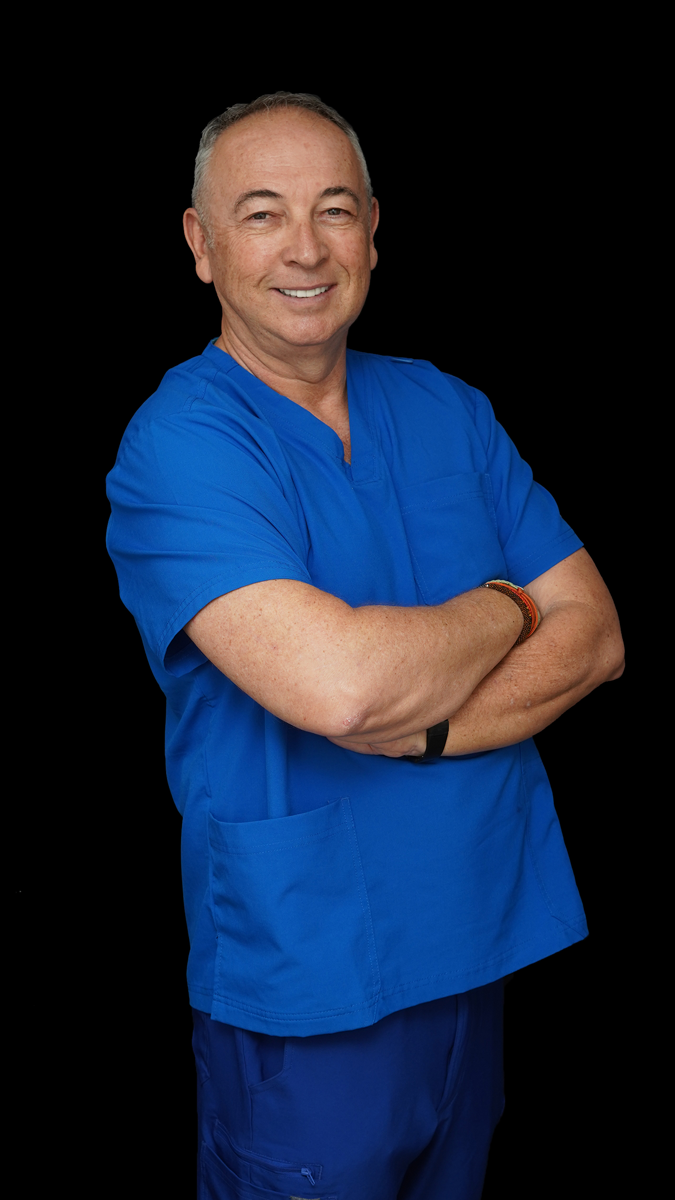
Recognized Expert in Dental Surgery and Implantology See full Bio