

🔑 Key Points:
- Upper jaw bone loss alters facial features and shrinks bone width up to forty percent within the first year.
- Advanced zygomatic implants firmly anchor into the cheekbone, completely avoiding complex bone grafts for severe bone loss.
- Three-dimensional CBCT technology provides an exact replica of your bone structure for precise, guesswork-free clinical diagnosis.
- Shtern Dental Clinic resolves bone loss in Cancun with world-class specialist care up to seventy percent lower in cost.
Conclusion: You can protect your facial structure from bone loss at Shtern Dental Clinic. Their multilingual experts use advanced technology to restore your smile safely, offering a seamless medical tourism experience with premium care in paradise.
Imagining that your smile is losing its support or that your facial features are changing due to missing teeth can be overwhelming. Upper jaw bone loss is a silent but common consequence of tooth loss, which compromises the firmness and youthfulness of your facial structure. Thanks to modern dentistry, it is now possible to stop this deterioration and restore your face’s natural harmony while enjoying a relaxing vacation in the paradise of Cancun.
What is dental bone loss and how does it affect you?
Dental bone loss is the biological process by which the bone supporting your teeth decreases in volume, height, and density. This bone tissue needs constant mechanical stimulation from daily chewing to stay strong, dense, and healthy.
When a tooth is lost, this stimulation disappears, and the body reabsorbs those minerals to use them for other functions. Over time, this wear and tear weakens the overall structure of the mouth and limits traditional options for placing conventional dental implants.
The bone resorption process step-by-step
Understanding how your mouth changes after losing a tooth is the first step toward taking control of your health. This process happens gradually, affecting the stability of your smile long before the changes become visible to the naked eye:
- Loss of stimulation: The absence of the tooth root interrupts the natural mechanical forces exerted on the alveolar bone.
- Cellular activation: The body detects bone inactivity and activates cells called osteoclasts to remove tissue it considers unnecessary.
- Volume reduction: The remaining bone begins to shrink rapidly, losing up to forty percent of its width within the first year.
- Tissue collapse: The gums and adjacent soft tissues sink as they lose their natural skeletal support base.
The uniqueness of upper jaw bone loss
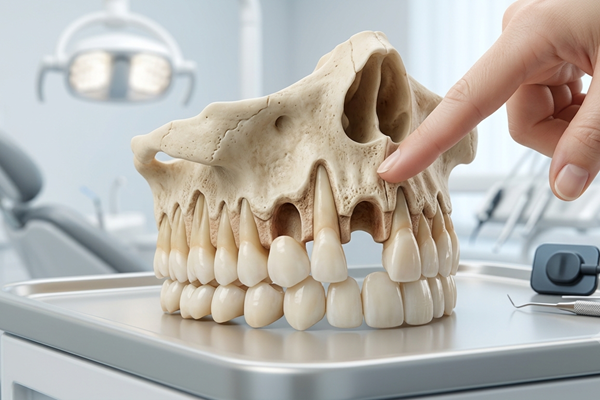
When this deterioration occurs in the upper area of the mouth, we face upper jaw bone loss, a very specific anatomical challenge. Unlike the lower jaw, the upper bone is more porous and is in direct contact with the maxillary sinuses.
When upper teeth are lost, the maxillary sinuses begin to expand downward in a process called pneumatization. This combination of vertical bone loss and expanding cavities creates an extremely thin bone base that requires a highly specialized clinical approach.
💡 Important practical tip:
One of the first signs of facial aging isn’t always in the skin—it can begin in the bone.
When upper jaw bone is lost, the support beneath your cheeks and upper lip gradually diminishes. The result is often a subtle change in facial contours that many people mistakenly attribute to aging alone.
Modern implant dentistry doesn’t simply restore missing teeth—it helps preserve the underlying bone that supports your natural facial appearance.
Main causes of upper jaw bone loss
The most frequent cause of this condition is the prolonged absence of teeth due to old extractions, severe cavities, or facial trauma. However, there are other critical factors that aggressively accelerate the destruction of support tissue in the upper arch.
- Chronic periodontal disease: Advanced periodontitis destroys the alveolar bone through destructive bacterial infections before the tooth even falls out.
- Use of removable dentures: Traditional conventional dentures exert constant friction and pressure on the gums, which accelerates bone resorption.
- Metabolic factors and age: Conditions like osteoporosis or hormonal imbalances decrease the body’s ability to regenerate new bone tissue.
Warning symptoms of maxillary bone loss
In its early stages, this problem is completely painless, making it difficult for patients to notice the damage before it becomes severe. It is essential to pay attention to the physical and functional changes that reveal advanced deterioration in your mouth’s structure.
- Premature facial aging: The lips lose their internal support, sinking inward and causing pronounced expression lines to appear.
- Altered facial features: The cheeks hollow inward, and the distance between the nose and the chin is visibly reduced.
- Instability in current prostheses: Removable dentures that used to fit well begin to loosen, cause sores, or move when speaking.
- Evident functional difficulty: Issues chewing firm foods and subtle alterations in pronunciation or the tone of your voice.
Accurate diagnosis using state-of-the-art technology
To determine the exact degree of maxillary resorption, at Shtern Dental Clinic we eliminate any kind of clinical guesswork. We utilize three-dimensional diagnostic tools that allow us to know the real state of your mouth quickly and without discomfort.
- Cone Beam Computed Tomography (CBCT): Captures an exact digital replica of your bone structure in three dimensions in just a few seconds.
- Digital millimetric measurement: Allows for an absolutely precise evaluation of the height, width, and actual density of the available maxillary bone.
- Guided virtual planning: We design the placement of your future implants in specialized software before performing the physical procedure.
Advanced treatments to restore your bone support
Fortunately, severe bone loss is no longer an obstacle to regaining a fixed, functional, and aesthetically perfect smile. International-level dental implantology offers extraordinary alternatives that adapt with total safety to each patient’s anatomy.
- Maxillary sinus lift: A procedure that gently moves the sinus membrane upward to place bone graft material in the newly created space.
- Block bone grafts: Placement of high-quality biocompatible materials to restore the horizontal and vertical thickness of the maxilla.
- Advanced zygomatic implants: A revolutionary technique where implants are anchored firmly into the cheekbone, completely avoiding bone grafts.
- Angulated implants (All-on-4): Strategic distribution of implants to make the most out of the areas where healthy bone is still preserved.
Comparing Solutions for Bone Loss
Below, we present a table to help you understand the key differences between the most effective surgical alternatives, allowing you to evaluate the ideal option for your lifestyle and needs.
| Treatment Option | Primary Indication | Key Advantage | Estimated Waiting Time |
|---|---|---|---|
| Graft & Sinus Lift | Moderate bone loss in posterior areas. | Restores bone volume naturally. | 4 to 6 months to heal. |
| Zygomatic Implants | Severe or extreme bone loss in the entire maxilla. | Avoids complex grafts; allows immediate prosthesis. | Fixed teeth in just a few days. |
| Angulated Implants | Generalized mild to moderate bone loss. | Maximizes remaining bone without invading sensitive areas. | 3 to 4 months for integration. |
Frequently Asked Questions About Maxillary Care
Can jawbone regenerate naturally?
No. Once the alveolar bone has resorbed due to a lack of stimulation, the body does not regenerate it on its own. The only way to recover lost volume is through specialized surgical regeneration procedures using biocompatible materials.
How long can I wait to get an implant before losing bone?
The resorption process begins immediately after losing a tooth, with the greatest deterioration occurring during the first twelve months. Ideally, you should plan your implant within a three-to-six-month period to preserve your original facial structure.
Are zygomatic implants dangerous?
No, it is an extremely safe and predictable procedure when performed by maxillofacial surgeons with extensive international experience. At Shtern Dental Clinic, we perform this intervention under strict conscious sedation protocols, ensuring the patient experiences no pain at all.
Your Path to a Firm Facial Structure at Shtern Dental Clinic
Protecting your face from aging and fully restoring your mouth’s function requires the highest surgical precision. At Shtern Dental Clinic in Cancun, your treatment is led by Dr. Dan Kopilovich, an elite surgeon with a rare double degree in Medicine (MD) and Dentistry (DMD), specializing in Oral, Maxillofacial, and Head and Neck Surgery.
With advanced specialty training in Israel and the United States (University of Maryland Medical Center), Dr. Kopilovich is an expert in resolving complex cases of upper jaw bone loss through sinus lifts and advanced zygomatic implants, guaranteeing completely safe and predictable results.
This hospital-grade clinical excellence is paired with warm, personalized, and multilingual care in our boutique clinic in Cancun. Here, you can restore your health using cutting-edge technologies while enjoying a well-deserved vacation, saving up to seventy percent compared to prices in the United States or Canada.
Forget about hospital stress and transform your treatment into a pleasant experience by combining your dental care with a well-deserved vacation on the beautiful beaches of Cancun.
We have strategic alliances with local travel agencies to assist you with all the logistics of your transportation, lodging, and stay. Take the first step toward renewed health by scheduling a consultation appointment with our specialists today, and get ready to smile with confidence again.
Sources
PubMed — Alveolar bone resorption
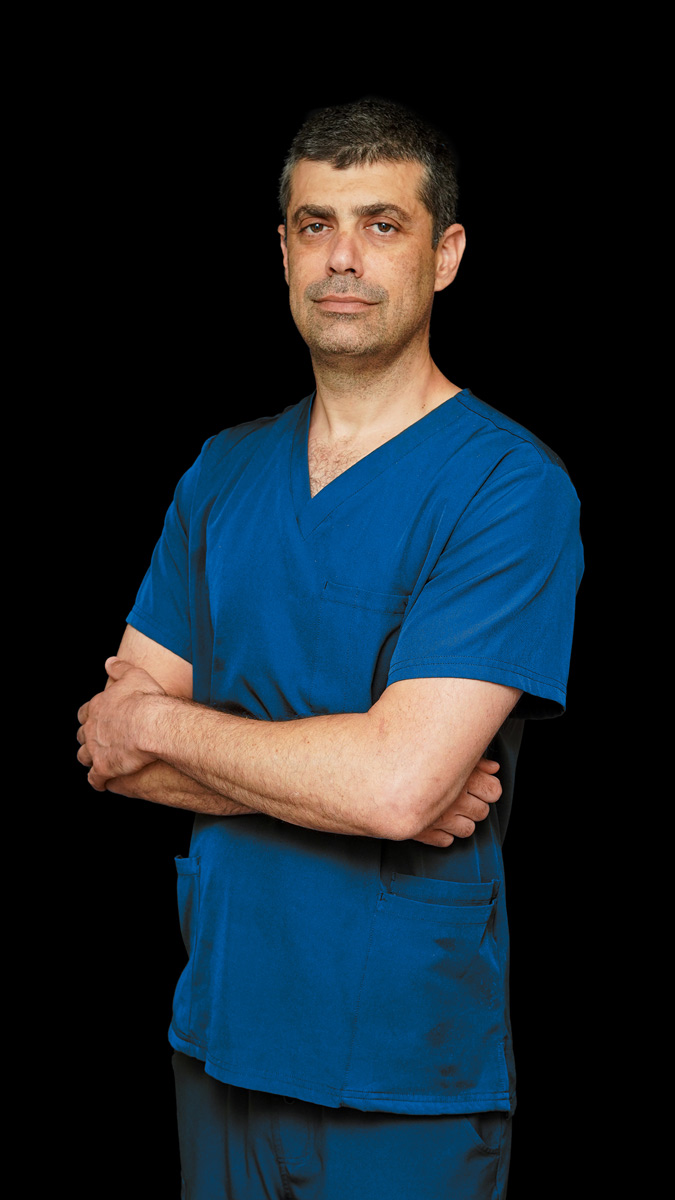
Dr. Dan Kopilovich Oral & Maxillofacial Surgeon | Head & Neck Surgery Specialist
Professional License: See full Bio